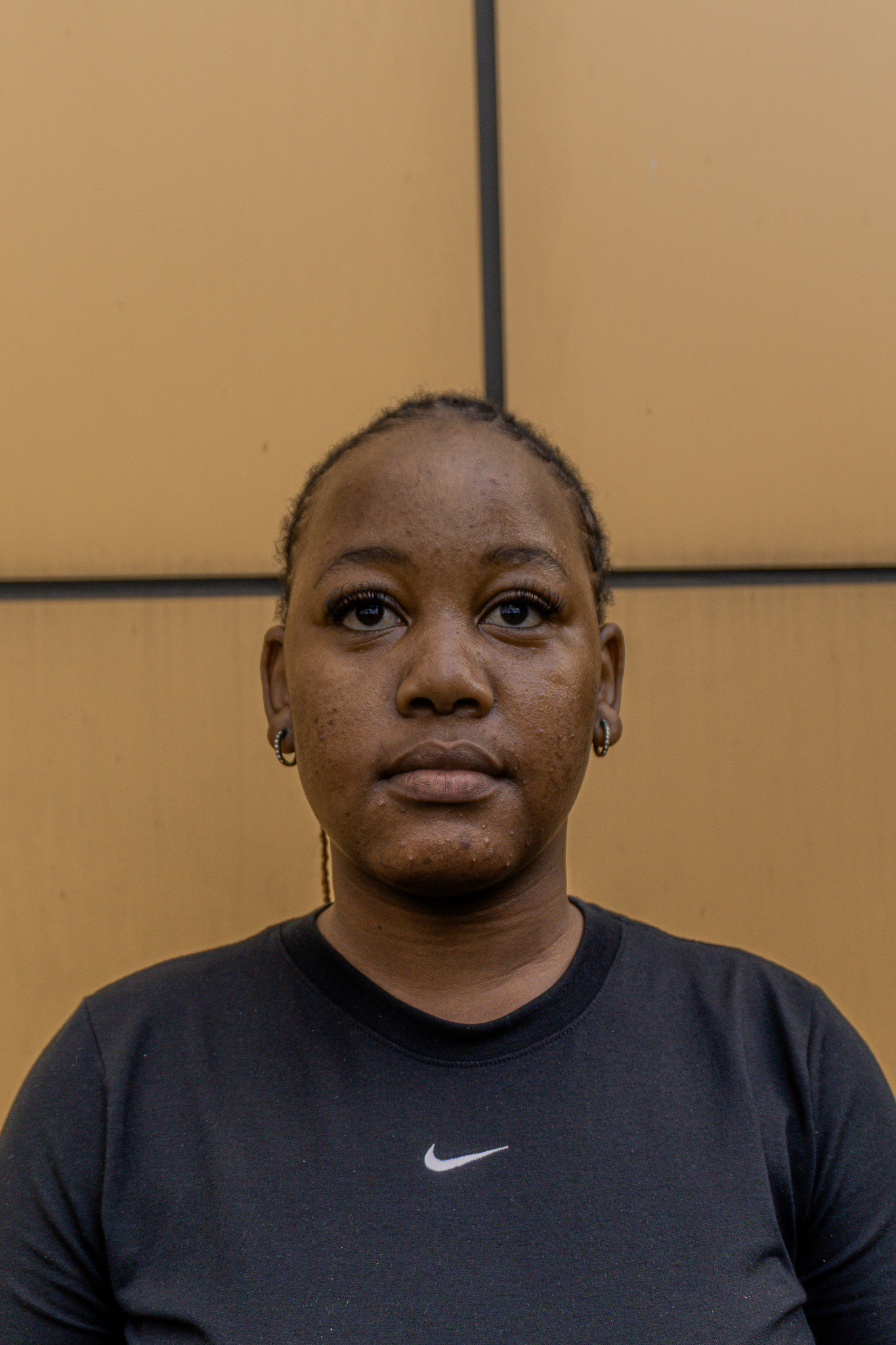
Post-graduate architecture student and fine artist, Ceylan Gerber, chose the award-winning uMkhumbane Cultural and Heritage Museum as the foundation for his body of work. Gerber’s initial plan was to engage with the building strictly through an architectural lens. He changed the course of his exercise upon learning that one of the architects behind the building had passed on. The introduction of this information and the guidance he received from the CAP mentors presented him with more lenses from which he can view the building. Instead, studying the building became the catalyst for a broader understanding of the community of Cato Manor. A month into developing the concept for the body of work, Gerber decided to include the human element into the story. He wanted the people of Cato Manor to form part of his presentation. Gerber did not abandon his architectural sensibilities in his quest to tell a human story – this body of work can be distilled to a variety of dichotomies that show the relationship between the built environment and the people. Stylistically Gerber distinguishes the images using colour and black and white – the images of the building are black and white, the ones with people are in colour. Another stylistic choice that is rather hard to miss; the museum is never shown in its entirety. Gerber framed the images in a way that only shows sections of the museum. He wanted to draw the attention towards the materials used, away from the size and implications of superiority and importance.The true size and any imp of the structure remains elusive to the viewer. Through kith and kin connections, Gerber gained access to the people of the Cato Manor community. As an “outsider” he was wary of making images that communicate his interest in the community without stripping the place and its people of their dignity. Once he had immersed himself in the community long enough, he started documenting. Gerber was interested in the materiality of the homes in the area and how the people who inhabit them engage with said materials. In A Roof Covering broken bricks, concrete blocks, roof tiles and a tyre are used to hold down a plastic covered metal sheet. The unorthodox use of these objects and materiality was interesting enough for Gerber to document. His scholarly understanding of the built environment made him appreciate the ingenuity with which the people of Cato Manor understand and interact with materials. This same understanding was extended towards the photographing of some informal structures. Gerber opted for the architecture industry standard of 90 degree angle framing – this can be seen in the Detail of subset of the collection. Presenting the use of materials in people’s homes parallel to the museum’s is an interesting juxtaposition of formal and informal architecture. There is a stylistic distinction between the photographs of the museum and the ones outside it. The museum images are in black. The images outside the museum are in colour. Gerber was able to make a few portraits of the people he developed a rapport with in the community. He was intentional with the backgrounds of each of these portraits. He along with the “sitter” decided on where to photograph. Precious stands in front of a smooth tile background at the local Sasol garage which also functions as a hangout spot for the local youth. Sphe stands in front of a container at the local shisanyama. Siya’s background is composed of two materials, corrugated iron and plastic. The making of these portraits allowed Gerber to learn about the dynamics of the community beyond visuals. He got to learn about life in Cato Manor and hear what the people care about. Through interactions with the multiple participants and other people whose faces were not photographed for this series, Gerber found out that the general feeling towards the grand award-winning museum building is indifference. The case of this “shining example of architectural confidence and authenticity” is not an isolated one. The Red Location Museum in New Brighton, Gqeberha is another ambitious, prize-winning building that did not get to exist as what it was intended to be. The difference between the two white elephants is that the residents of Cato Manor have not protested over the building’s existence. There is an image where we only see the silhouette of a human figure against the clay brick wall of the museum. It is the shadow of the security guard in charge of keeping the building safe. The presence of some form of barrier communicates the importance of the museum. Without people’s interaction with the space, the worth of the building is questionable. Gerber’s foray into photography highlights and amplifies a considerable number of questions around space, access and place. He credits the incubation for lessons on creating a thematically sound body of work. The understanding of existing in the environment as a person before a documentarian is another lesson he learnt during his incubation. Gerber plans to continue incorporating photography into his practice. This body of work was the first edition in a series of planned photography-led explorations.