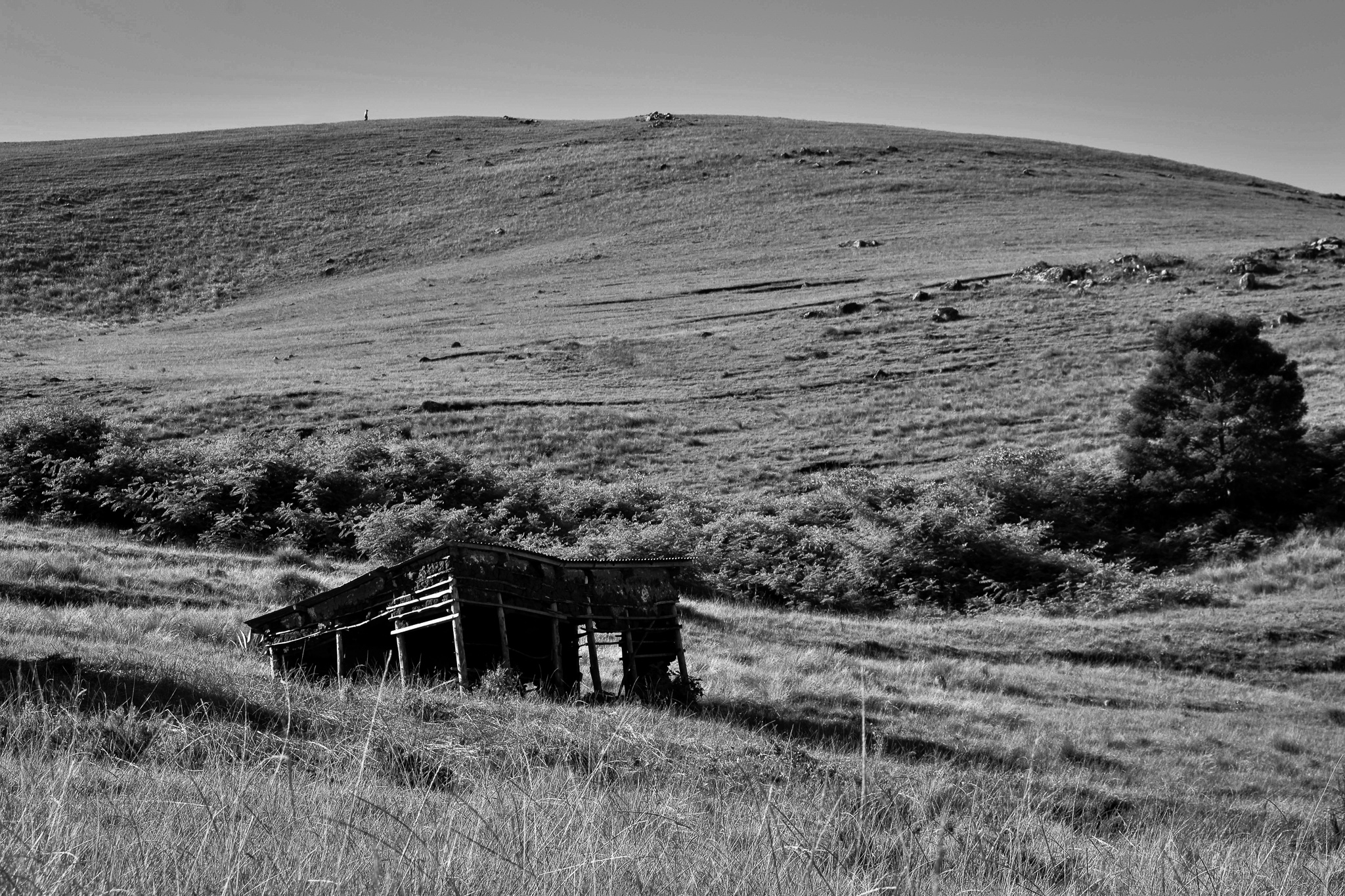
Milani Dlamini’s The Illusion of Freedom series is composed of images depicting infrastructure in different stages of ruin in black and white. The bulk of the project focused on the rural communities of Flagstaff, Eastern Cape. She juxtaposed these images with one image she made in the city of Johannesburg, Gauteng. Hospital Bed With Decaying Wall. This image shows the ruin of what used to be a hospital ward in Old Fort Prison. “The image was created to showcase the juxtaposition between the clinic situation in the city and how everything is collapsing.” One of the prisoners who is believed to have used the bed shown in the photograph is former President Nelson Mandela. Mandela “was the fort’s only black prisoner and served time here in 1956, while he waited at the fort’s Awaiting Trial Block to be transferred to Pretoria for the Treason Trial, and then again in 1962, after being arrested outside Howick in KwaZulu-Natal. It was this arrest that would lead to his 27-year imprisonment”. The prison and the military fort now exist under a new name, Constitution Hill, “a living museum that tells the story of South Africa’s journey to democracy” Milani was moved to document and juxtapose the state of the museum wall with the dilapidation of community clinics both in the city and rural communities like Magqagqeni. The infrastructure that is supposed to bring a better life to people of Magqagqeni and other communities is comparable to worn out rooms used to exhibit struggle for tourists. How does one honour the presentation of a story when there is undeniability to how they feel about the subject? How can you circumvent the abyss of resentment when documenting spaces that offer meanings beyond your immediate reading? When Milani sees never-ending queues in the public clinic next to her home, she feels disappointed and let down. Let down by the government. Milani wanted to show the complexity of the issue through documenting the ruin alongside the resourcefulness of the people in the midst of abandonment by the government. The series juxtaposes hope and despair; beauty and ruin. These feelings and observations stir the inquisitiveness that informs Milani’s documentary work. The photograph of the Magqagqeni Community Hall is perhaps the best embodiment of the aforementioned point. In this photograph we see a corrugated iron structure with school desks. There is light coming in from two windows. The community built this hall independent of the government’s assistance. The photographs in this body work consistently feature light as a symbol of “the strength that continues to carry these communities forward, showing that even in hardship, there is courage, unity, and an unbroken belief in a better and more dignified future for all”. The composition of A Single Straight of Light makes for a striking and visually pleasing image. The resplendent natural light illuminates the dark interior of the mud structure, exposing the bumps and unevenness of the walls. The same light glints off the logs holding up the zinc roof. This image transports the series’ thematic devices – hope and despair; light and darkness, and inequality – to the literal plane. The dawn of democracy promised a better life for all South Africans yet communities like the one Milani is from are yet to fully experience freedom. They are yet to see all the colours of the rainbow. She wanted to document the lack of care exhibited by the government without discounting the agency of the people who inhabit these underserved communities. Life is still happening amidst all the hardships presented by the restricted access to resources. She presents the world as it is; whether that incites change or not, it is not up to her. Milani attributes her time at the CAP incubation as necessary for falling back in love with photography. She will continue to make her voice heard in all the work she does across mediums.